

A small, ordinary-looking quarter has become the star of one of the most exciting modern treasure stories. According to numismatic legends, a rare Bicentennial quarter allegedly worth $2.5 billion could still be moving through everyday circulation, hiding in wallets, jars, and vending machines. While experts stress that this value is purely theoretical and the coin has never been verified, the story has inspired millions to look at their spare change with fresh curiosity.
The Bicentennial Quarter: A Coin From Celebration
The Bicentennial quarter was released in 1976 to celebrate the 200th anniversary of the United States. Instead of the usual eagle, it features a drummer-boy design that quickly made it a favorite among collectors and the general public.
Why This Quarter Stands Out
- Issued to mark America’s 200th birthday
- Features the dual date 1776–1976
- More than a billion were minted, making regular examples very common
- Its special design keeps it popular in coin collections and starter sets
The Prototype That Shouldn’t Exist
At the heart of the legend is a supposed prototype Bicentennial quarter that was never meant to leave the U.S. Mint. According to stories from retired workers and collector lore, a small batch of test coins was struck to trial an ultra‑pure silver alloy. All were scheduled for destruction—but some claim that one coin slipped out.
Alleged Features of the Prototype
Collectors say this mythical piece would show:
- A sharp, proof-like finish with mirror-style surfaces
- A slightly heavier weight due to higher silver purity
- A tiny, almost invisible mark made by the experimental die
- Microscopic text near the rim, rumored to read “Prototype‑1”
None of these features have been officially documented or authenticated, but the lack of proof only adds to the mystery.
Why Talk of $2.5 Billion?
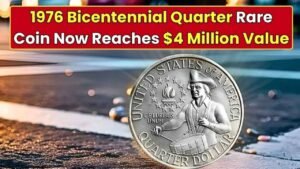
On the surface, valuing a quarter at $2.5 billion sounds impossible. Yet in theory, collectors imagine a perfect storm of factors that could push the price sky-high if the coin were real and verified.
Factors Behind the Mythical Value
- Supposed one‑of‑a‑kind prototype
- Connection to a major national celebration
- Decades of rumors and speculation
- Intense competition among ultra‑wealthy collectors for unique artifacts
In reality, no auction house, grading service, or museum has ever confirmed such a coin, so the $2.5 billion figure remains pure fantasy.
Could the Coin Still Be in Circulation?
The story claims that this prototype quarter may have accidentally been mixed into a batch of normal coins and released into circulation. If true, it could have passed through countless hands over the years.
Where It Might Be Hiding (If It Exists)
People imagine it could be:
- Sitting unnoticed in a coin jar or piggy bank
- Forgotten in a safe deposit box
- Stuck inside a casino’s coin-counting system
- Spent long ago at a store, gas station, or vending machine
From time to time, people report “strange” Bicentennial quarters, but none have matched the full mythical description or been proven genuine prototypes.
Social Media And The New Treasure Hunt
In the age of short videos and viral posts, the legend has exploded online. Coin enthusiasts and casual viewers alike share clips of themselves sorting through rolls of quarters, hoping for a once‑in‑a‑lifetime discovery.
How The Hype Has Changed the Hobby
- Local coin shops see more people bringing in Bicentennial quarters for checks
- New collectors, including younger audiences, are entering the hobby
- More people are learning basic coin‑grading and error‑spotting skills
Even seasoned experts, while dismissing the billion‑dollar price tag, admit that such stories are great for sparking interest in numismatics.
Myth vs. Possibility
Most professionals agree: a $2.5 billion quarter almost certainly does not exist in circulation. However, history has seen rare coins—once thought lost or destroyed—turn up in pocket change, old collections, or dusty estate boxes. That tiny chance keeps the legend alive.
What’s Realistic to Expect
- The story is best viewed as modern folklore
- Some Bicentennial quarters, especially rare errors or top‑grade pieces, can be worth real money
- The true value lies more in the fun of the hunt than in a guaranteed life‑changing windfall
Quick Tips: Checking Your Bicentennial Quarters
If you want to turn the legend into a fun hobby, here’s how to examine your 1776–1976 quarters:
- Look for sharp details and minimal wear
- Check for unusual weight, odd color, or missing layers
- Watch for clear errors like off‑center strikes, doubling, or damaged dies
- Keep the best‑looking examples in a separate holder or flip
Most finds will not be worth a fortune—but coin collecting can still be enjoyable and educational.
FAQs About the $2.5 Billion Bicentennial Quarter
1. Does a Bicentennial quarter worth $2.5 billion really exist?
No confirmed example has ever been found or authenticated. The story is based on rumors and speculative narratives, not documented numismatic evidence.
2. Are any Bicentennial quarters actually valuable?
Yes. While most are worth face value, high‑grade examples, silver issues, and rare mint errors can be worth more, sometimes significantly more, to collectors.
3. Why do people think the coin is still in circulation?
The legend claims that a prototype test coin accidentally left the Mint and entered normal circulation. The idea that such a rarity could sit unnoticed in everyday change makes the story compelling.
4. Could a prototype coin really escape the Mint?
It is rare but not impossible. In the past, a few experimental or pattern coins have surfaced after being thought lost or destroyed, though strict controls make this unlikely today.
5. Should I save my Bicentennial quarters just in case?
Yes, especially if they look unusually sharp, different, or high quality. Even if none are worth millions, they are historic pieces that many collectors enjoy keeping.
Conclusion: A Legend That Keeps People Looking
The “$2.5 billion Bicentennial quarter” is almost certainly a myth—but it is a powerful one. It has revived interest in an already beloved coin, encouraged people to learn about history and minting, and turned everyday pocket change into a small adventure. Next time you receive a 1776–1976 quarter, take a closer look; you might not find billions, but you may discover a new hobby, a neat collectible, or at least a great story to share.