
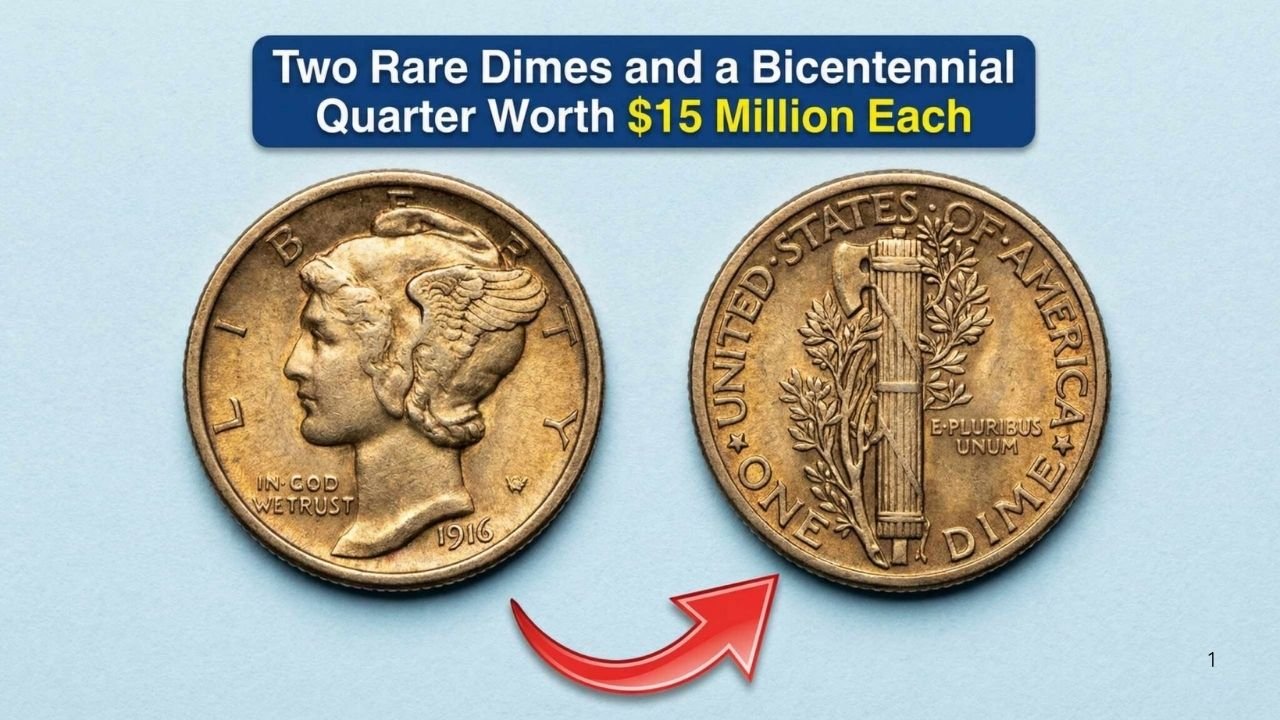
Imagine discovering a coin in your change that could be worth millions. While it sounds like a collector’s fantasy, a few rare U.S. coins—like the Mercury Dime, the Barber Dime, and the Bicentennial Quarter—have fetched extraordinary prices at auction. Each represents a unique chapter in American numismatic history, blending artistry, rarity, and historical significance.
The Mercury Dime: Icon of Early 20th-Century America
Minted from 1916 to 1945, the Mercury Dime is celebrated for its stunning design by Adolph A. Weinman. Its obverse depicts a youthful Liberty wearing a winged cap, symbolizing freedom of thought, while the reverse shows a fasces bound by an olive branch, representing strength and peace.
The 1916-D Mercury Dime
- Mintage: 264,000 coins at the Denver Mint
- Why it’s rare: Limited production compared to other years
- Value: $10,000–$30,000 (circulated), $200,000+ (mint-state)
Collectors prize this coin for its design and scarcity, making it one of the most sought-after dimes in U.S. history.
The Barber Dime: Legendary Scarcity
Before the Mercury Dime, Charles E. Barber designed the Barber Dime (1892–1916), featuring Liberty with a laurel wreath on the obverse and a wreath surrounding “ONE DIME” on the reverse. Most Barber Dimes are common, but the 1894-S Barber Dime is exceptional.
- Mintage: Only 24 coins
- Known surviving coins: Fewer than 10
- Auction value: $500,000–$2 million+ depending on condition
This coin’s mysterious origin—possibly struck as gifts or test pieces—adds to its allure, making it the holy grail for many collectors.
The Bicentennial Quarter: Patriotism in Your Pocket
Minted in 1975–1976 to celebrate America’s 200th birthday, the Bicentennial Quarter features George Washington on the obverse and a Colonial drummer with 13 stars on the reverse, designed by Jack L. Ahr.
- Composition: Copper-nickel clad for circulation; 40% silver for collector sets
- Key collector types: Silver proof (S mint mark) and error varieties
- Value: $50–$200 (uncirculated), $500–$1,000+ (errors)
This coin marked the first major design change on the quarter since 1932 and sparked renewed interest in coin collecting.
Comparing Rarity and Value
| Coin | Mint Years | Key Rarity | Mint Mark | Est. Value | Notable Feature |
|---|---|---|---|---|---|
| Mercury Dime | 1916–1945 | 1916-D | D (Denver) | $10,000–$200,000+ | Winged Liberty design |
| Barber Dime | 1892–1916 | 1894-S | S (San Francisco) | $500,000–$2M+ | Only 24 minted, 9 known |
| Bicentennial Quarter | 1975–1976 | Silver proof (S) | S (San Francisco) | $50–$1,000+ | Dual date “1776–1976” |
Why Collectors Love These Coins
- Historical Significance: Each coin represents a distinct era of American history.
- Artistic Design: From Liberty’s winged cap to the Bicentennial drummer, these coins are miniature works of art.
- Investment Potential: Rare dimes and quarters consistently appreciate over time.
Even if you’re just starting, the Bicentennial Quarter is an accessible entry point, while the Mercury and Barber Dimes offer thrilling challenges for seasoned collectors.
FAQs

How rare is the 1916-D Mercury Dime?
Only 264,000 were minted, making high-grade examples extremely valuable.
Why is the 1894-S Barber Dime so expensive?
Its tiny mintage and mysterious origin make it one of the rarest U.S. coins.
Are Bicentennial Quarters worth keeping?
Yes, silver proofs and error varieties can hold collector value.
What metals are these coins made from?
Barber and Mercury Dimes: 90% silver; Bicentennial Quarters: copper-nickel or 40% silver (collector sets).
Who designed the Mercury Dime?
Adolph A. Weinman, also known for the Walking Liberty Half Dollar.
Conclusion
These rare coins aren’t just currency—they’re pieces of American history. From the artistry of the Mercury Dime to the legendary scarcity of the Barber Dime and the patriotic charm of the Bicentennial Quarter, each coin offers collectors a blend of heritage, beauty, and investment potential. So, the next time you check your coin jar, remember: a small coin could hold a fortune—and a story that spans centuries.