

In 1976, the United States celebrated its 200th birthday with fireworks, parades, and a flood of commemorative items. Among them, the 1976 Bicentennial Quarter quietly became a collector’s obsession. While most of these coins are still worth just 25 cents, a handful of rare varieties and minting errors have skyrocketed in value—some fetching up to $3 million. Here’s how to identify these extraordinary quarters and what to do if you find one.
The Story Behind the 1976 Bicentennial Quarter
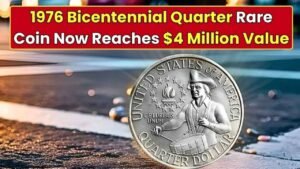
To honor America’s bicentennial, the U.S. Mint replaced the traditional eagle reverse with a Colonial drummer holding a victory torch, surrounded by 13 stars representing the original colonies. The obverse retained George Washington’s portrait, but the dual date “1776–1976” highlighted the historic occasion.
These quarters were minted in three locations:
- Philadelphia: No mint mark
- Denver: D mint mark
- San Francisco: S mint mark (proof and 40% silver collector editions)
While billions of copper-nickel quarters entered circulation, the limited silver issues never did—making them particularly valuable today.
Rare Bicentennial Quarters That Command High Prices
| Variety | Key Feature | Approx. Value |
|---|---|---|
| Silver Planchet Error | Accidentally struck on 40% silver planchets | Up to $3 million |
| Double Die Obverse/Reverse | Doubling on “IN GOD WE TRUST” or drummer design | $500–$25,000+ |
| Off-Center Strike | Partial or misaligned design | $100–$5,000+ |
| High-Grade MS-68+ | Nearly flawless uncirculated coins | $1,000–$15,000+ |
| Silver Proof “S” Mintmark | Collector proof coin, pristine condition | $10–$500+ |
Values are based on certified sales through PCGS, NGC, and reputable auctions.
How to Identify a Valuable 1976 Bicentennial Quarter
1. Check the Mint Mark
- Look to the right of Washington’s portrait
- “S” = San Francisco proof or silver
- “D” = Denver
- No mark = Philadelphia
2. Test the Metal Composition
- Silver quarters: 5.75 grams, solid silver edge, lighter hue
- Standard clad: 5.67 grams, copper-colored edge
- Even small differences can indicate a rare strike
3. Inspect for Errors
- Use a 10x magnifying glass to check letters and numbers for doubling
- Look at the drummer’s hat, drum, and rim for misalignment
- Partial or missing design elements can signal a minting error
4. Professional Authentication
- Send coins to PCGS or NGC for grading
- High-grade coins or rare errors verified by experts can dramatically increase market value
Where to Find These Rare Quarters
Even decades later, rare Bicentennial quarters appear in:
- Old coin rolls from banks
- Estate or inherited collections
- Vintage collector proof sets
Tip: Never clean the coin—fingerprints and abrasions can reduce value. Store it in a soft, acid-free holder until it is professionally appraised.
Why Collectors Value Bicentennial Quarters
These coins combine history, artistry, and investment potential. Collectors appreciate the patriotic design, unique mint errors, and limited silver editions. The market for rare Bicentennial quarters continues to grow as supply diminishes and interest in coin collecting surges.
FAQs
1. Are all 1976 Bicentennial quarters valuable?
No, most are worth 25 cents. Only rare silver, proof, or error coins hold significant value.
2. How can I identify a silver quarter?
Silver quarters weigh 5.75 grams and have a solid silver edge. Copper-nickel versions show a brownish stripe.
3. Should I get my coin graded?
Yes. PCGS or NGC certification confirms authenticity and can dramatically increase value.
4. Can circulated quarters still be valuable?
Yes, particularly if they have minting errors or exceptional condition.
5. What’s the highest confirmed value for a 1976 quarter?
Silver planchet error quarters have sold for around $3 million at private auctions.
Conclusion
While most 1976 Bicentennial quarters remain common, rare errors and silver strikes can be worth a small fortune. By carefully inspecting your coins, checking mint marks, testing composition, and seeking professional grading, you could uncover a piece of history worth millions. Even if you don’t strike gold, the hunt itself offers a fun and fascinating glimpse into America’s coinage heritage.