
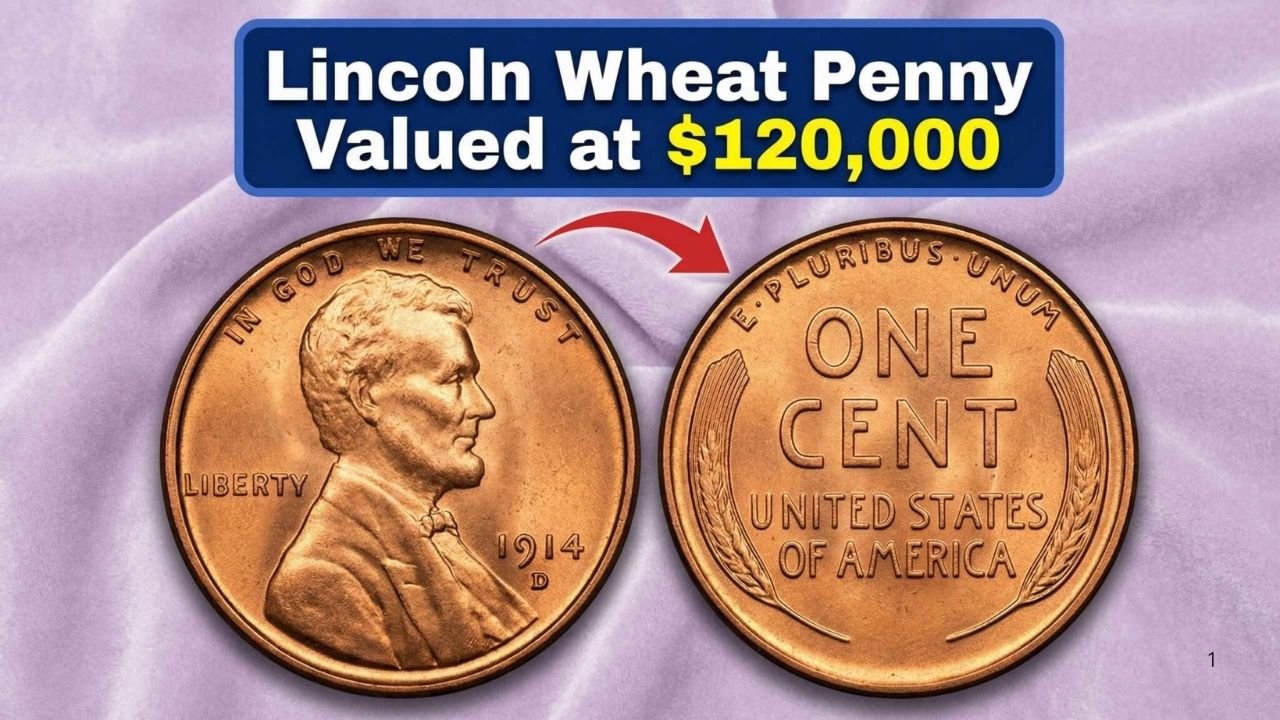
What if a single penny in your pocket could be worth more than a luxury watch or even a car? That’s the story of the 1914-D Lincoln Wheat Penny, one of the most sought-after coins in American numismatics. With its tiny mintage, historical significance, and rarity, this humble cent has turned into a high-value collector’s dream, fetching up to $120,000 in uncirculated condition.
Why the 1914-D Is So Rare
The 1914-D Lincoln Wheat Penny was minted at the Denver Mint, producing only 1,193,000 coins—an exceptionally low number for its time. Unlike modern coins that are carefully preserved, most of these pennies entered heavy circulation, passing through stores, pay envelopes, and pocket change for decades.
Today, finding one with its original details intact is extremely rare, making the 1914-D a “key date” for collectors.
Design Features
- Obverse (Front): Abraham Lincoln’s profile facing right, with inscriptions “IN GOD WE TRUST”, “LIBERTY”, and the date 1914.
- Reverse (Back): Two wheat stalks framing “ONE CENT”, with “UNITED STATES OF AMERICA” in between.
- Mintmark: A small D below the date, indicating it was produced in Denver.
This tiny mintmark is what elevates an ordinary 1914 penny to a collector’s treasure.
Condition Matters: The Grading Factor
Scarcity alone isn’t enough; the coin’s condition dramatically affects its value. Most 1914-D pennies are heavily worn, making high-grade specimens extremely rare. Professional grading by PCGS or NGC is essential for accurate valuation.
| Grade | Condition | Approx. Value (USD) |
|---|---|---|
| Good (G-4) | Heavily worn | $200–$300 |
| Fine (F-12) | Moderate wear | $400–$700 |
| Extremely Fine (XF-40) | Light wear | $1,000–$2,500 |
| About Uncirculated (AU-50) | Slight wear | $3,000–$6,000 |
| Mint State (MS-60+) | Uncirculated, original luster | $10,000–$120,000+ |
In 2023, a 1914-D MS-65 sold for $120,000, highlighting how condition can make or break the coin’s market value.
Spotting the 1914-D Penny
If you think you’ve found one, here’s a quick guide:
- Check the Year: Look for 1914 on the obverse.
- Identify the Mintmark: Small D under the date.
- Condition Check: Look for sharp details and original luster.
- Authentication: Always get it graded by PCGS or NGC to confirm authenticity.
Be cautious: counterfeits are common, often created by altering 1944-D pennies or adding fake mintmarks.
Historical Context
The year 1914 was significant: World War I had begun in Europe, Ford’s Model T dominated U.S. roads, and the Lincoln cent design was only five years old. The limited resources of the Denver Mint contributed to the low production, making each surviving 1914-D a piece of early 20th-century American history.
Why Collectors Value the 1914-D
- Key Date: Essential for completing a Lincoln Wheat Penny collection.
- Historical Artifact: Reflects early 20th-century industry and coinage.
- Investment Potential: Rare, high-grade coins increase in value over time.
- Prestige: Owning one signals expertise and dedication in numismatics.
Even if never sold, a 1914-D is a tangible piece of history, cherished by collectors and investors alike.
FAQs
Why is the 1914-D Lincoln Wheat Penny so rare?
Only about 1.1 million were minted, and most were heavily circulated, leaving few high-grade examples.
What does the “D” mintmark mean?
It indicates the coin was minted at the Denver Mint.
How much is a 1914-D worth today?
Depending on condition, from $200 (worn) to $120,000+ (Mint State).
How can I verify my penny is authentic?
Have it graded by PCGS or NGC, the leading professional grading services.
What does the coin look like?
Obverse: Lincoln’s profile. Reverse: two wheat stalks framing “ONE CENT.”
Conclusion
The 1914-D Lincoln Wheat Penny is more than a small copper coin—it’s a rare artifact of American history, a collectible masterpiece, and a potential six-figure treasure. Next time you dig through spare change, take a closer look—you might just stumble upon a piece of history worth a fortune.