
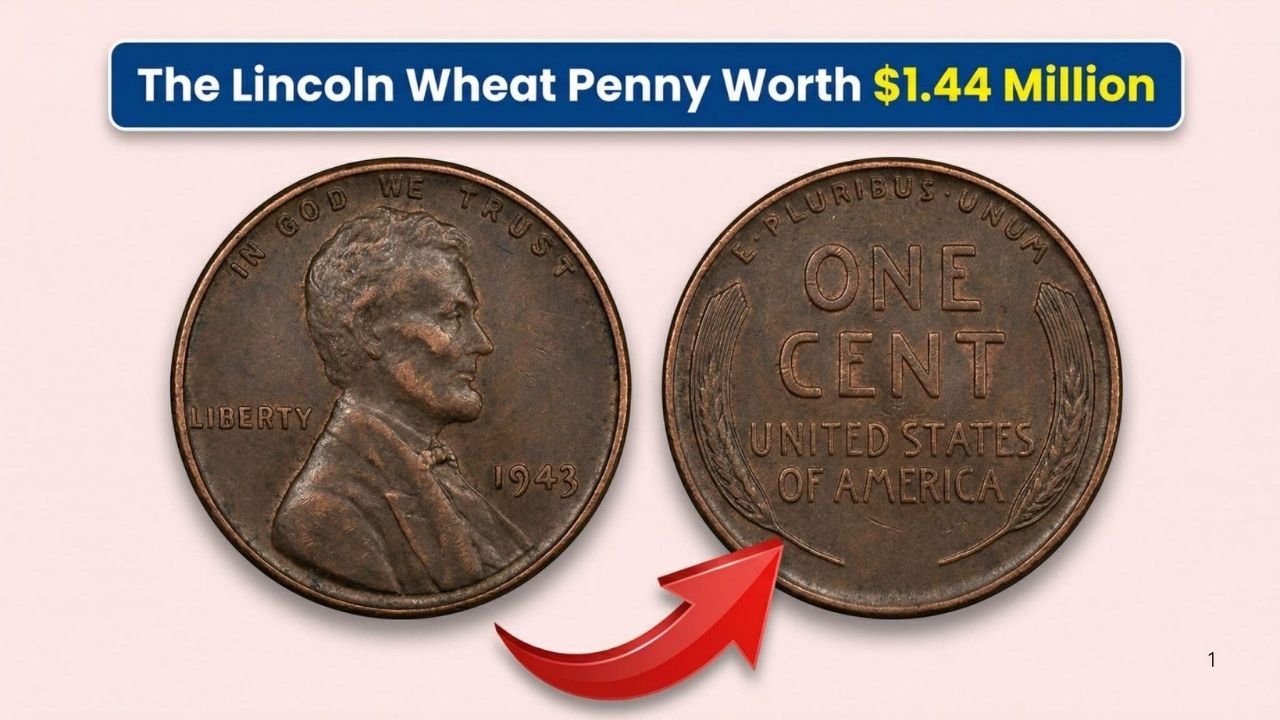
Imagine a single penny worth more than a sports car or a small house. That’s exactly the story of the 1943 Bronze Lincoln Wheat Penny, one of the rarest and most valuable U.S. coins ever minted. One of these extraordinary pennies recently sold for a staggering $1,440,000, making it a holy grail for collectors—and potentially sitting unnoticed in coin jars across America.
The Lincoln Wheat Penny: A Century-Old Classic
First minted in 1909 to honor Abraham Lincoln’s 100th birthday, the Lincoln Wheat Penny marked a first for U.S. coinage: the face of a real person. Sculpted by Victor David Brenner, the coin features:
- Obverse: Lincoln’s profile
- Reverse: Two wheat stalks surrounding “ONE CENT”
Minted between 1909 and 1958 in Philadelphia, Denver, and San Francisco, most Wheat Pennies are worth just a cent today. However, rare variations like the 1909-S VDB, 1914-D, and especially the 1943 Bronze Penny, are highly prized.
How the 1943 Bronze Penny Came to Be
During World War II, copper was essential for ammunition and military equipment. To conserve it, the U.S. Mint switched to zinc-coated steel for pennies in 1943.
But a few leftover bronze planchets from 1942 accidentally made it into the presses. The result? A handful of 1943 Bronze Wheat Pennies, never intended to exist. These mistakes are now legendary in the numismatic world.
What Makes It So Valuable
| Factor | Why It Matters |
|---|---|
| Wartime Error | Made during WWII when copper was restricted |
| Limited Quantity | Fewer than 20 confirmed examples exist |
| Unique Composition | Bronze instead of steel |
| Historical Significance | Reflects minting innovation and wartime scarcity |
| Collector Demand | Considered a “holy grail” penny |
Even circulated examples can fetch hundreds of thousands of dollars if authenticated.
How to Spot a 1943 Bronze Penny
Before getting too excited, here’s a quick check:
- Check the Year: Look for 1943
- Magnet Test: Steel pennies stick; bronze does not
- Inspect Color: Bronze coins are reddish-brown; steel ones are silver-gray
- Check Mint Marks: Look for a D (Denver) or S (San Francisco) below the date
Pro Tip: Avoid cleaning the coin. Counterfeits exist, especially copper-coated steel pennies. Authentication by a grading service like PCGS or NGC is essential.
Where Rare Pennies Have Been Found
Collectors have discovered Wheat Pennies in:
- Old piggy banks
- Garage sales and estate auctions
- Loose change from stores or vending machines
Some 1943 bronze pennies slipped into circulation before anyone realized, making every jar of coins a potential treasure trove.
What to Do If You Find One
- Do not clean the coin
- Store safely in a soft holder or coin flip
- Authenticate through a trusted grading service
- Avoid quick online sales until verified
- Consider an appraisal by a reputable auction house or coin dealer
If verified, your penny could instantly become a high-value collector’s item.
FAQs
What is a Lincoln Wheat Penny?
A U.S. penny minted from 1909 to 1958 featuring Lincoln on the front and wheat stalks on the back.
Why is the 1943 Bronze Wheat Penny so rare?
It was accidentally struck in bronze during a year when pennies were supposed to be steel.
How can I check if my penny is valuable?
Look for the year 1943, check the mint mark, and perform a magnet test.
Should I clean my old penny before selling?
No. Cleaning reduces collector value. Keep it as-is.
How much did the most expensive penny sell for?
A 1943 bronze Wheat Penny sold for $1,440,000 at auction.
Conclusion
The Lincoln Wheat Penny is more than a coin—it’s a piece of American history and a potential goldmine. From wartime errors to rare mint variations, these pennies hold stories, nostalgia, and extraordinary value. Next time you sift through loose change, take a closer look—your next $1.44 million discovery might be closer than you think.