

Imagine finding a quarter in your pocket that could be worth millions of dollars. It may sound like a fantasy, but some rare U.S. State Quarters have recently captured headlines for their extraordinary value. Experts estimate that five specific State Quarters could fetch $6–7 million each due to unique minting errors and ultra-rare variations—and believe it or not, they might still be in everyday circulation.
Whether hidden in coin jars, wallets, or rolled up in banks, these coins have sparked a nationwide treasure hunt that combines history, mystery, and the thrill of discovery.
Why Some State Quarters Are Worth Millions
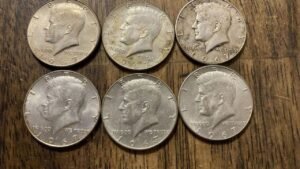
Introduced in 1999, the State Quarters program produced millions of coins for collectors and circulation. While most are ordinary, a small handful stand out due to:
- Extreme rarity—only a few minted or survived.
- Minting errors—off-metal strikes, double dies, and missing elements.
- Experimental planchets—coins made from unusual metals not meant for circulation.
- Collector demand—scarcity and high interest push values into millions.
These rare quarters are now considered the “holy grail” of modern coin collecting.
The 5 Most Valuable State Quarters
Below are the five ultra-rare quarters collectors are hunting for:
| Quarter | Error / Feature | Estimated Value | Notes |
|---|---|---|---|
| 1999 Georgia | Gold Planchet | $6–7 Million | Minted accidentally on gold-colored experimental planchet; only 1–2 exist |
| 2004 Wisconsin | “High Leaf” Prototype | $5–6 Million | Corn stalk shows exaggerated extra leaf; extremely rare |
| 1999 Delaware | Double-Die Obverse | $6 Million | Dramatic doubling on “CAESAR RODNEY” and date/motto |
| 2000 South Carolina | Off-Metal Strike | $7 Million | Struck on Sacagawea dollar planchet; wrong size, weight, and metal |
| 2005 Kansas | “IN GOD WE RUST” Die Break | $5–6 Million | Missing “G” and major die crack; prototype error |
Key Features That Make a Quarter Extremely Valuable
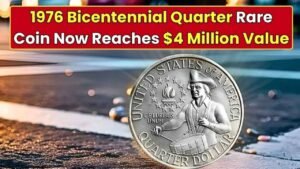
Collectors look for specific minting anomalies that dramatically increase value:
- Off-Metal Strike: Coin struck on the wrong metal planchet.
- Double-Die Letters: Thick, shadowed lettering on obverse or reverse.
- Experimental Planchet: Rare gold or brass alloy.
- Early Die Prototype: Test strikes before mass production.
- Major Mint Error: Die breaks, missing elements, or mis-strikes.
Even subtle differences can turn a common quarter into a multimillion-dollar collectible.
How These Coins Are Still in Circulation
Many rare State Quarters slipped through because:
- Banks distributed them in mixed coin rolls.
- Families stored coins without checking for errors.
- Early mint mistakes were not separated.
- Some coins were spent, re-deposited, or forgotten for decades.
Today, there’s still a chance that one of these five multimillion-dollar quarters is sitting in someone’s change jar or bank roll.
How to Identify If You Have One
To spot a potentially valuable State Quarter:
- Check the Year: Focus on coins from 1999–2005.
- Examine Color and Weight: Gold-toned or unusually heavy/light coins may be off-metal strikes.
- Inspect Lettering: Look for doubling, thick shadows, or missing letters.
- Look for Major Errors: Die cracks, extra leaves, misaligned designs.
- Use Magnification: A 10× loupe helps reveal tiny but critical details.
If your coin matches these features, consider sending it to a professional grading service like PCGS or NGC for authentication.
FAQs About Rare State Quarters
1. Are these valuable quarters really still in circulation?
Yes. Many rare coins were spent, deposited, or re-rolled, so they can still appear in everyday change.
2. Which State Quarter is worth the most?
The 2000 South Carolina off-metal strike is estimated at up to $7 million.
3. How do I know if my quarter is rare?
Check for unusual colors, doubled letters, missing elements, or major die cracks.
4. Should I clean a rare coin before selling?
No. Cleaning reduces value significantly; keep it in original condition.
5. Who can verify my coin’s value?
Professional grading companies like PCGS or NGC can authenticate and assess value.
Conclusion
The possibility of finding a $6–7 million State Quarter in your pocket or coin jar is real and thrilling. These rare coins, born from minting errors, experimental planchets, and early prototypes, show that extraordinary treasures can hide in the most ordinary places.
If you have a collection of State Quarters, now is the time to inspect them carefully. You could be holding a piece of history—and a potential fortune—right in your hands.