

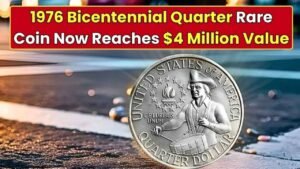
The 1976 Bicentennial Quarter was minted to celebrate the United States’ 200th birthday, making it a piece of history you can hold in your hand. While most of these quarters are common and still circulate today, some versions and minting errors can be surprisingly valuable. If you have a jar of old coins at home, knowing what to look for could turn ordinary change into a collector’s treasure.
Tip 1: Check the Mintmark
Mintmarks tell you where a coin was produced, giving clues about rarity and potential value. On Bicentennial quarters, the mintmark is located near George Washington’s portrait on the obverse (front).
Key Mintmarks
| Mint | Mark | Quantity Minted | Notes |
|---|---|---|---|
| Philadelphia | None | 809,784,016 | Common, typically only face value |
| Denver | D | 860,118,839 | Common, but some error coins are valuable |
| San Francisco | S | Various: 11M Silver Uncirculated, 4M Silver Proof, 7M Copper-Nickel Proof | Coins with 40% silver content are heavier (5.75 g vs 5.67 g) and worth $8–$10 in proof condition |
Pro Tip: Silver Bicentennial quarters have a solid silver edge and slightly higher weight—easy to spot with a digital scale.
Tip 2: Look for Rare Errors
Minting errors can dramatically increase a coin’s value. Even small mistakes make a coin highly collectible.
Common Errors and Their Value
- Double Die Obverse (DDO): Shows doubled text or design. Value: $100–$1,000+. Use a magnifying glass to check letters and numbers.
- Die Cap Errors: Occur when a coin sticks to the die. Value: Can exceed $2,000. Look for raised, cap-like areas on the coin.
- Off-Center Strikes: The design is shifted. Dramatic misalignments are especially valuable.
Condition Matters
- Uncirculated Coins: Worth more than circulated coins.
- High Grades (MS68): Can fetch $3,000+
- Professional Grading: Recommended for rare or high-value coins.
Collector’s Tips
- Magnifying Glass: Detect subtle errors.
- Digital Scale: Verify silver coins’ weight.
- Good Lighting: Makes details easier to see.
- Handle Carefully: Touch only edges or wear gloves.
- Storage: Use airtight holders in a dry, stable environment.
- Avoid Cleaning: Cleaning lowers value.
Estimated Market Values
| Coin Type | Value Range |
|---|---|
| Common Circulated Quarters | Face value |
| Silver Proofs | $8–$10 |
| Error Coins | $100–$3,000+ |
| Die Cap Errors | $2,000+ |
| MS68 Graded Coins | $3,000+ |
Why Bicentennial Quarters Are Worth Collecting
Beyond monetary value, these coins celebrate American history. Silver coins, mint errors, and high-grade examples often appreciate over time, making them both fun to collect and potentially profitable. Building a relationship with reputable dealers and staying updated on market trends can enhance your collecting experience.
FAQs
Q1: How do I identify a silver Bicentennial quarter?
Look for the “S” mintmark and a solid silver edge.
Q2: Are all Bicentennial quarters valuable?
No, most are only worth face value unless they are silver or have minting errors.
Q3: What is a Double Die Obverse error?
A minting mistake that shows doubling in letters or design.
Q4: Should I clean my Bicentennial quarters?
No, cleaning can reduce a coin’s value.
Q5: How can I determine a coin’s grade?
Use professional grading services like PCGS for accurate evaluation.
Conclusion
Bicentennial quarters are more than just pocket change—they are tiny pieces of history with hidden potential. By checking mintmarks, spotting rare errors, and preserving coins properly, collectors can uncover truly valuable treasures. Whether for fun or investment, keeping an eye out for these coins can turn your coin jar into a goldmine.