
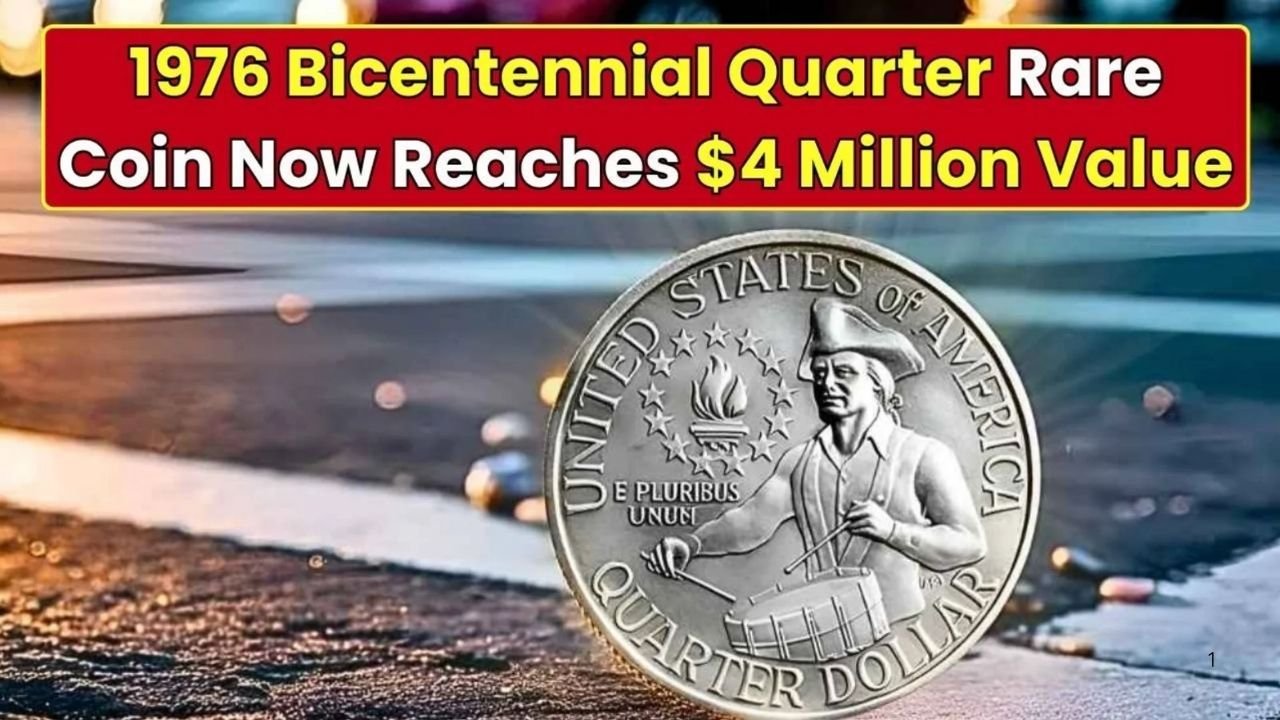
Imagine sifting through your old change and discovering a quarter that could be worth millions of dollars. The 1976 Bicentennial quarter is a symbol of America’s 200th birthday, and while billions were minted, a few ultra-rare mistakes have skyrocketed in value. Could one be hiding in your jar of coins?
The History Behind the 1976 Bicentennial Quarter
To celebrate the United States’ bicentennial, the Mint replaced the usual eagle design on the reverse with a colonial drummer boy and torch, designed by Jack L. Ahr. The coins were produced in 1975 and 1976, and most bear the mint marks D (Denver) or S (San Francisco). A small number have no mint mark, and those are the ones collectors dream about.
Why Some 1976 Quarters Are Worth Millions
A tiny handful of quarters were accidentally struck on 40% silver planchets intended for proof coins. These “silver error” quarters look almost identical to regular coins but weigh slightly more and have a different ring when tapped.
The holy grail? The 1976 No-S silver quarter, with only two known examples publicly documented. One sold in 2024 for $4.3 million, making it the most valuable modern U.S. coin ever.
| Feature | Regular 1976 Quarter | Rare No-S Silver Error |
|---|---|---|
| Composition | Copper-nickel | 40% Silver |
| Weight | 5.67 g | 5.75–5.90 g |
| Mint Mark | D, S, or none (common) | None (only 2 known) |
| Recent Sale Price | 25¢ – $5 | $1.8M – $4.3M+ |
| Edge | Reeded | Slightly different tone |
Auction Records & Market Highlights (2023–2025)
- Apr 2024 (MS-68) – $4.32 million, Heritage Auctions
- Jan 2023 (MS-67) – $1.74 million, Stack’s Bowers
- Aug 2025 (MS-67+) – $2.9 million, GreatCollections
These sales show that ultra-rare Bicentennial errors have massive collector demand.
How to Spot a Valuable 1976 Bicentennial Quarter
Step-by-Step Guide
- Check the date: Must read “1776–1976”
- Look for missing mint mark: The most valuable have no D or S
- Weigh the coin: Over 5.75 grams signals silver content
- Magnet test: Silver coins are non-magnetic
- Edge and color: Slightly different tone compared to copper-nickel quarters
Expert Tips
- Never clean coins; this destroys collector value
- Use a digital scale for precise weighing
- Have suspected rare coins graded by PCGS or NGC
- Beware of fake “added mint mark” coins
Frequently Asked Questions (FAQs)
Q1: Are all 1976 quarters valuable?
A: No. Nearly all are worth 25¢. Only rare silver errors and some double dies have high value.
Q2: What about 1976-S silver proofs?
A: They are nice for collectors but generally worth $10–$30. The real rarity is a No-S silver coin.
Q3: Where can I sell a potential $4 million quarter?
A: Reputable auction houses like Heritage Auctions or Stack’s Bowers handle authentication and sales.
Q4: How can I safely identify an error quarter?
A: Look for missing mint marks, off-metal errors, or weight discrepancies. Use a magnifying glass and compare with images of verified coins.
Q5: Are there smaller errors worth money?
A: Yes. Double dies, off-center strikes, or silver-plated errors can fetch $500–$10,000+ depending on rarity and condition.
Final Thoughts – Could Your Change Fund Your Retirement?
The story of the 1976 Bicentennial quarter proves that fortunes can hide in plain sight. While finding a $4 million No-S silver coin is extremely rare, thousands of lesser errors still hold substantial value. Start digging through that jar of old change—you never know when your next quarter might make history.